


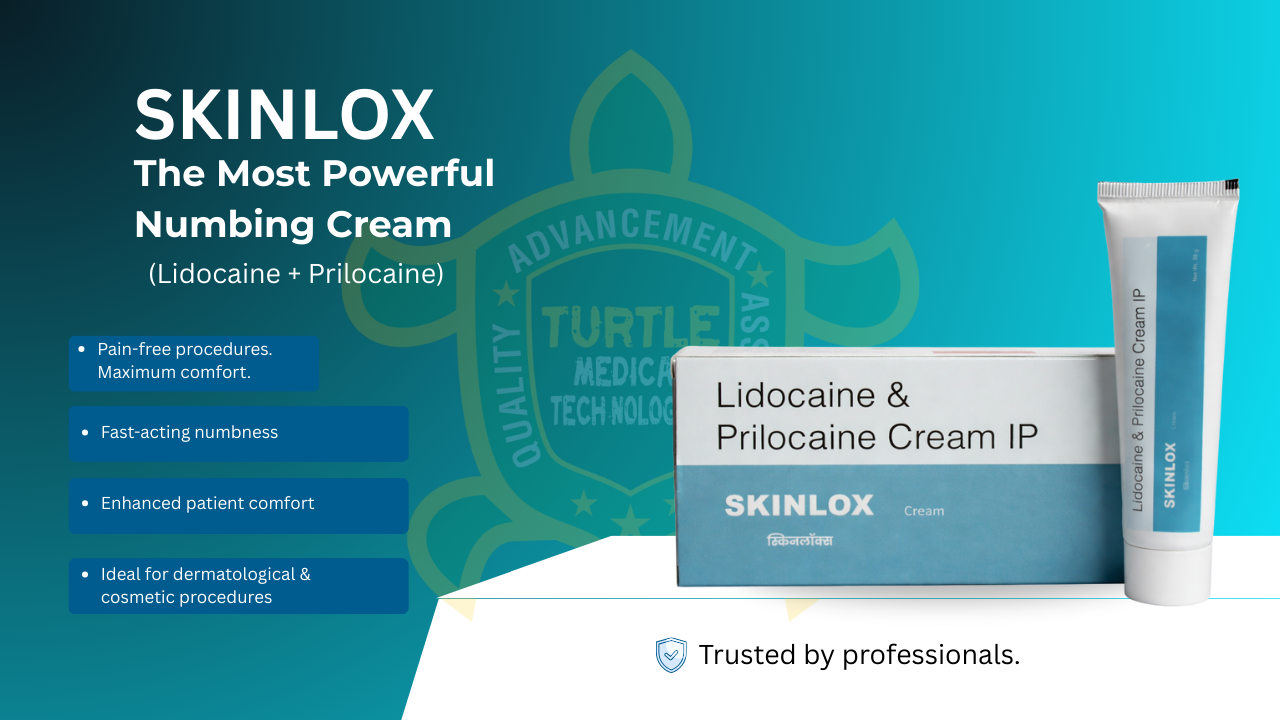
SKINLOX™ Cream: Topical Anaesthetic for Laser & Aesthetic Procedures: Benefits, Uses & Clinical Guide
SKINLOX™ Cream is a topical anaesthetic preparation containing lidocaine and prilocaine, intended for use prior to dermatological and aesthetic procedures. It is developed to improve procedural comfort and allow smoother treatment performance in routine clinical practice.
The formulation produces reversible anaesthesia of the epidermis and superficial dermis when applied appropriately, helping reduce procedure-related discomfort.
Why Effective Numbing Matters in Practice
Adequate topical anaesthesia significantly influences patient tolerance during procedures. When numbing is predictable, treatments tend to proceed more smoothly for both the patient and practitioner.
Clinically, effective numbing may help with:
Better patient cooperation
Lower perceived discomfort
More efficient procedure flow
Increased operator confidence
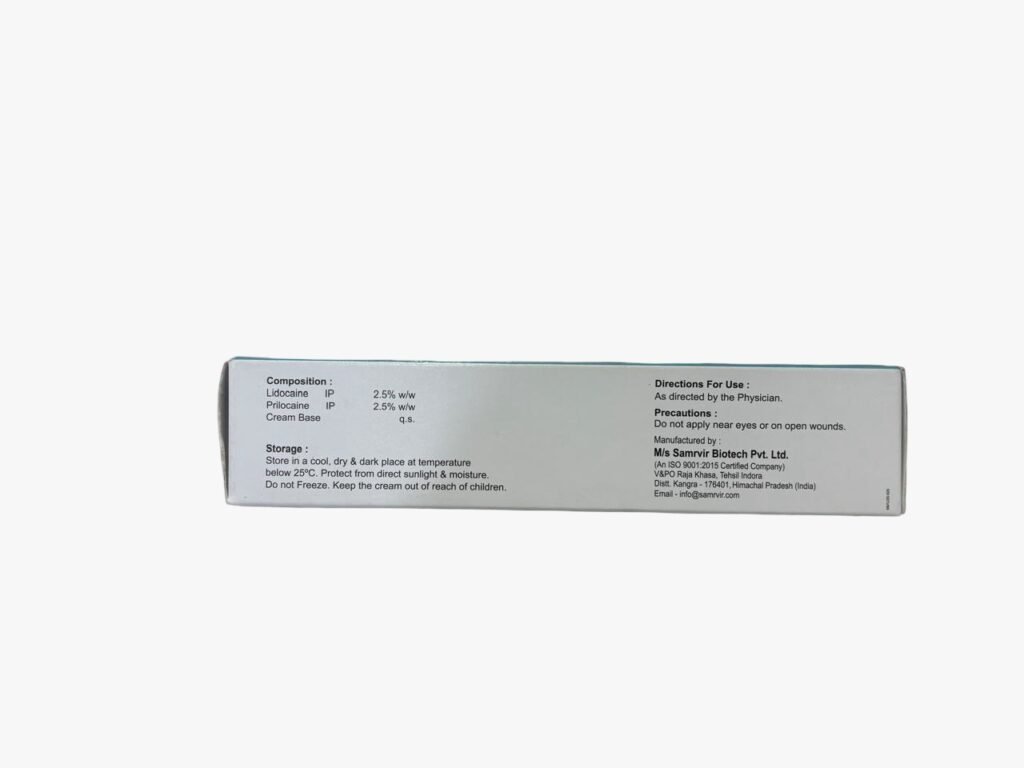
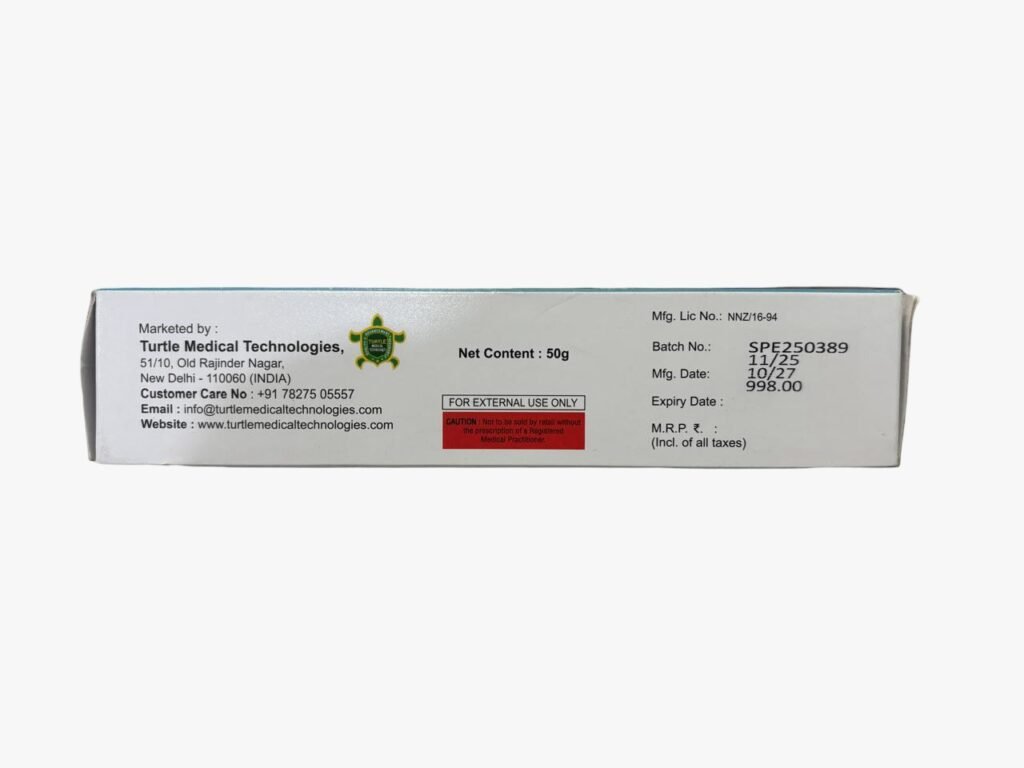
SKINLOX™ Cream combines lidocaine & prilocaine to provide localised topical anaesthesia prior to aesthetic and dermatologic interventions.
Key Characteristics
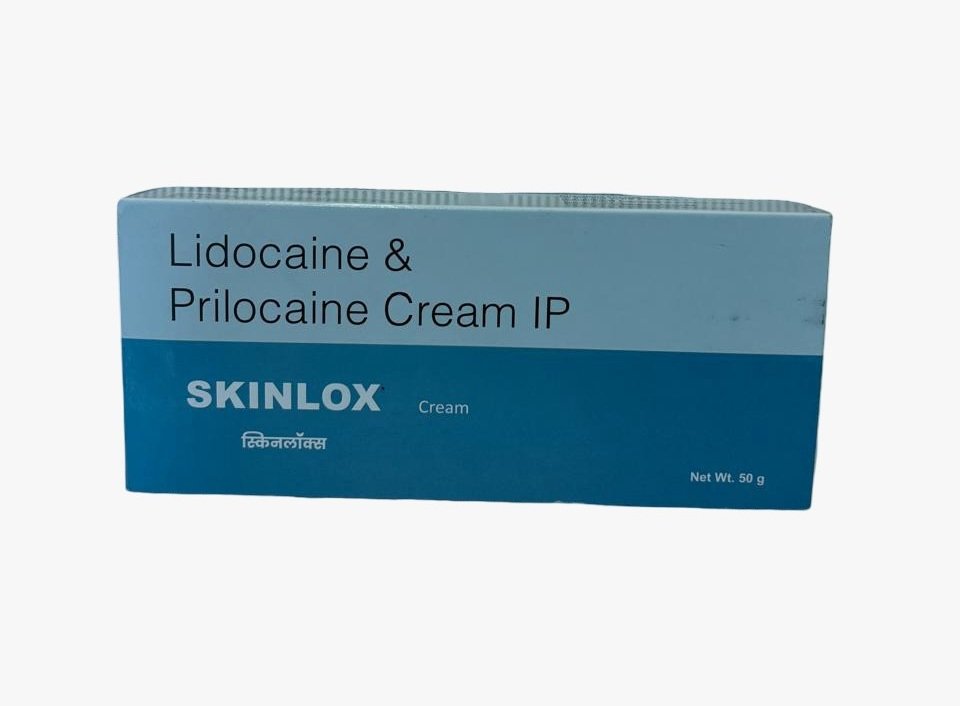
The effectiveness of topical anaesthesia depends on skin thickness, vascularity and application technique. When applied correctly, SKINLOX™ Cream provides reliable epidermal and superficial dermal numbing suitable for common clinic procedures.This may assist in:
•Adequate pain control
•Fewer interruptions during treatment
•Even anaesthesia across the treatment area
The formulation is suitable for sensitive treatment sites and moderately longer procedures, and is generally well tolerated on intact skin.
Safety Considerations
•Designed for controlled topical absorption
•Helps minimise procedure-related stinging
•Appropriate for different skin types under supervision
Uniform Numbing Across Treatment Areas
In procedures requiring symmetry or precision, uneven anaesthesia can affect patient comfort. A uniform numbing effect helps maintain treatment consistency, particularly in:
•Bilateral facial procedures
•Large treatment areas
•Detail-oriented aesthetic treatments
Why Clinicians Prefer It
•Provides adequate topical anaesthesia depth
•Improves patient comfort during procedures
•Suitable for clinic-based aesthetic practice
•Helps maintain procedural continuity
SKINLOX™ vs. Prilox Cream — Clinical Comparison
| Parameter | SKINLOX™ Cream | Prilox Cream |
| Active Ingredients | Lidocaine + Prilocaine | Lidocaine + Prilocaine |
| Formulation Focus | Designed for professional clinical & aesthetic procedures | Primarily positioned for general topical anaesthesia |
| Depth of Numbing | Deeper and more reliable dermal penetration | Moderate numbing effect |
| Consistency of Anaesthesia | Uniform and predictable across treatment areas | May vary depending on application and skin type |
| Onset of Action | Fast and clinically predictable; reduces interruptions and reapplication | Variable; may require reapplication in longer procedures |
| Duration of Effect | Optimised for longer aesthetic procedures | Suitable for short procedures |
| Patient Comfort | High comfort with minimal stinging or irritation | Acceptable comfort |
| Skin Tolerability | Designed for sensitive and treated skin | Standard tolerability |
| Ideal Use Environment | Dermatology and aesthetic clinics | Clinics and general medical use |
| Suitability for Advanced Aesthetic Procedures | Highly suitable for lasers, injectables, micro-needling | Suitable for basic procedures |
| Doctor Preference | Preferred for precision-based aesthetic practice | Commonly used alternative |
*Based on formulation characteristics and clinical experience, not head-to-head trials.
Recommended Clinical Uses for SKINLOX™ Cream
•Laser Hair Removal
•Laser Treatment for Skin Pigmentation
•Micro-needling / RF Micro-needling
•Injectables such as Fillers and Mesotherapy
•Chemical Peels
•Tattoo Removal
•Minor Dermatological Treatments
Application Instructions
- Quantity to Use
•Apply a generous, even coat of SKINLOX™ Cream over the desired treatment area.
•Do not rub vigorously, as this may negatively affect the treatment outcome. - Cover the Treatment Area (Recommended)
•Cover the treated area with an airtight barrier (e.g., plastic wrap or an occlusive dressing). Covering enhances absorption and increases overall effectiveness.
•Ensure the area is completely covered and sealed without applying pressure. - Duration of Application
•The cream should remain on the treatment area for 20–30 minutes for most procedures.
•For deeper and/or more sensitive treatments, the cream may remain for up to 45 minutes, based on clinical judgment.
Removal of Dressing Before Treatment
•Carefully remove the occlusive dressing.
•Wipe off all excess SKINLOX™ Cream using sterile gauze.
•Clean the area gently before beginning the procedure.
Anticipated Effects
Numbness is expected within 20–30 minutes.
Adequate anaesthesia provides:
•Reduced patient discomfort
•Greater procedural precision
•Improved patient cooperation
Post-Treatment Guidelines
Patients may experience mild redness or temporary tingling, typically resolving within a few hours.
Patients should:
•Avoid touching or scratching the treated area
•Follow post-procedure care instructions specific to the treatment received.
Warnings (Please Read Before Use)
For external use only. Avoid contact with eyes, mouth, and mucous membranes.
Do NOT use SKINLOX™ Cream on:
•Open or broken skin
•Recently infected skin or active infections
•Severe dermatitis (unless prescribed by a physician)
Use with caution in:
•Pregnant patients (only if clinically approved by a physician)
•Patients with hypersensitivity or allergy to local anaesthetics
Clinical Viewpoint
SKINLOX™ and Prilox contain similar anaesthetic agents. However, SKINLOX™ is specifically optimised for aesthetic and dermatological performance, providing deeper and more consistent numbing while maximising clinical workflow efficiency — critical elements in modern practice.
FAQs
- What are the indications for SKINLOX™ Cream?
SKINLOX™ Cream is an advanced topical anaesthetic designed to reduce pain and discomfort associated with aesthetic, dermatological, and minor medical procedures. - What are the active ingredients in SKINLOX™?
It contains Lidocaine and Prilocaine, two clinically proven local anaesthetics that act synergistically to deliver deep, consistent, and predictable numbness. - How does SKINLOX™ differ from other numbing creams?
Formulated exclusively for professional clinical use, SKINLOX™ provides:
•Deeper numbness
•Uniform anaesthesia
•Predictable results
•Higher patient comfort
•These qualities make it suitable for advanced aesthetic procedures. - When does SKINLOX™ start working?
Typically within 20–30 minutes, though timing may vary depending on treatment area and skin type. The clinician will advise the exact duration. - How long does numbness last?
The duration usually covers most aesthetic and dermatological procedures but may vary based on skin thickness and treatment depth. - Is SKINLOX™ safe for all skin types?
Under professional supervision, it is generally safe for most skin types. Sensitive patients may require a patch test and medical history review. - Can SKINLOX™ be used before injectables or micro-needling?
Yes. It provides consistent and uniform pain relief for procedures such as fillers and micro-needling - Are there side effects?
Temporary redness and mild tingling may occur. Significant side effects are rare when used as directed by trained professionals. - Is SKINLOX™ safe for sensitive areas (face and underarms)?
Yes. It is suitable for sensitive areas while maintaining patient comfort. - Why do physicians prefer SKINLOX™?
•Predictable anaesthetic depth
•Improved patient cooperation
•Reduced procedural interruptions
•Better precision for high-accuracy procedures - How does SKINLOX™ differ from Prilox cream?
Both contain Lidocaine and Prilocaine; however, SKINLOX™ is designed specifically for clinical aesthetics and offers enhanced consistency and workflow efficiency for advanced procedures. - Who should not use SKINLOX™?
Patients with known allergies to local anaesthetics or certain medical conditions should consult a physician before use.